
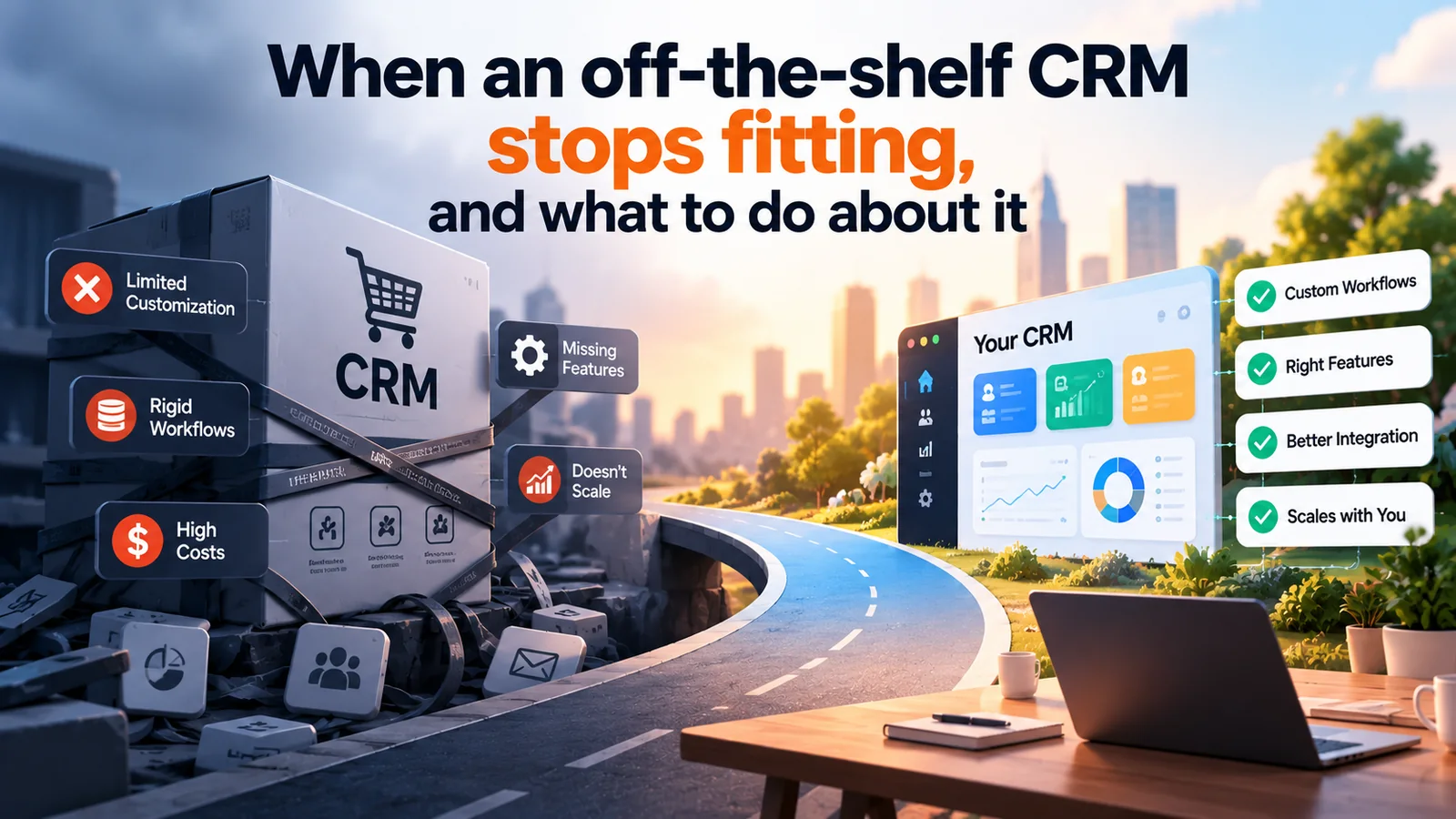
When an off-the-shelf CRM stops fitting, and what to do about it
HubSpot, Zoho and Salesforce are the right answer for most companies. These are the signs that yours has outgrown them, and the three options you have when it does.
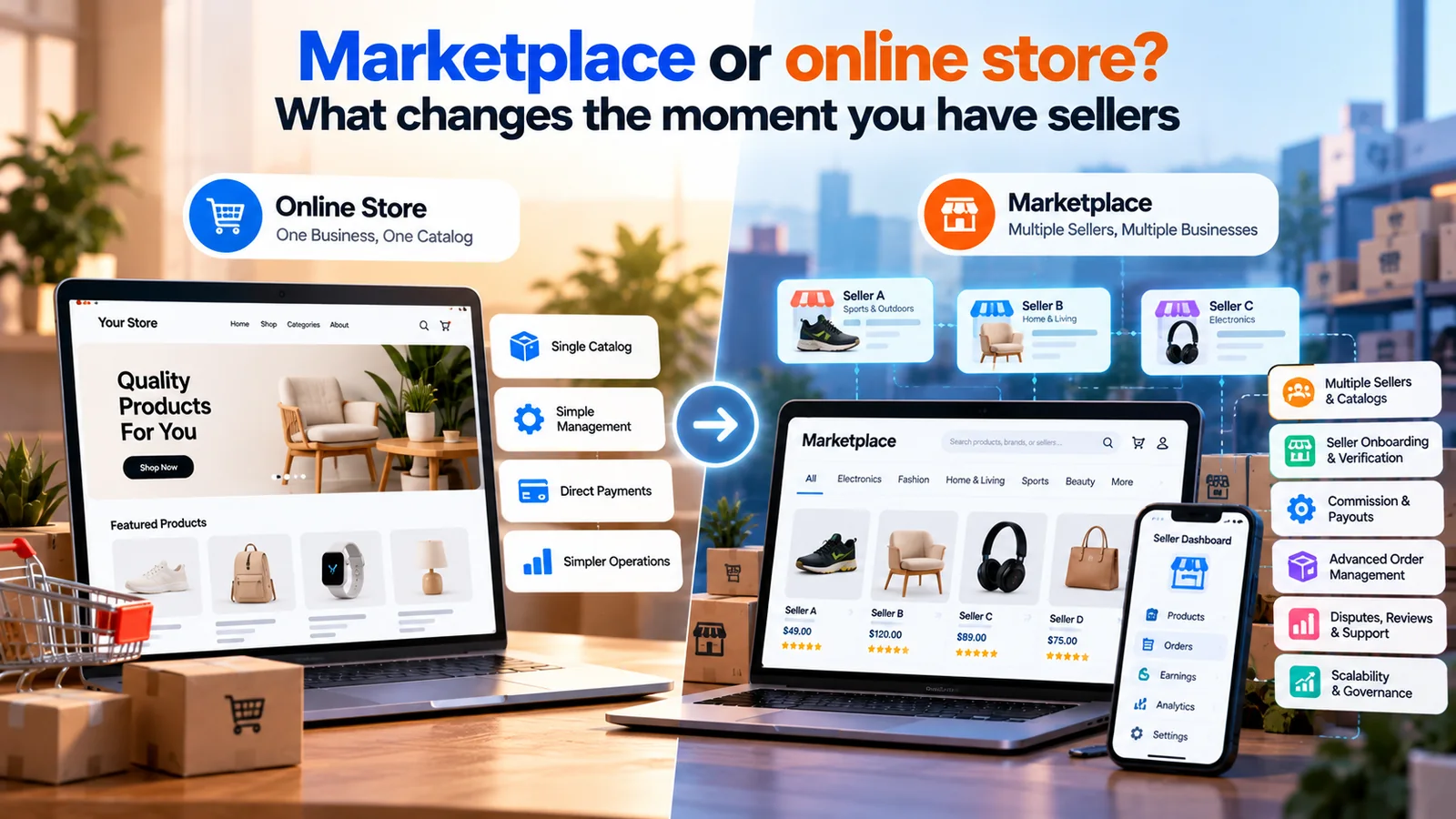
Founders often describe their idea as “like an online store, but with multiple vendors”. The “but” is doing a lot of work in that sentence. A marketplace is a different product, and knowing that early saves months.
In a store, a customer pays you. In a marketplace, a customer pays, the money is split between you and the seller, and the seller gets paid out — perhaps days later, perhaps after the buyer confirms delivery, perhaps minus a refund. That is not a checkout button; it is a payments system with ledgers, holds and payouts.
The good news is you should not build it. Stripe Connect and similar products handle split payments, seller onboarding, identity checks and payouts, and they carry the regulatory burden of holding other people’s money. We integrate them rather than reinvent them, and we design the order flow around how they work.
A store has customers. A marketplace has customers and sellers, and the sellers need an entire second product: onboarding, a dashboard, listings management, order handling, messaging, payout history, performance stats. In most marketplaces we have built, the seller side is at least as much work as the buyer side. Budget for it.
Customers trust a store because they trust the brand. On a marketplace they are buying from a stranger, and the platform’s job is to make that feel safe: verified sellers, reviews, clear delivery promises, a returns policy that is enforced, and a dispute process when things go wrong. Each of those is a feature with screens and rules behind it.
Item not received, item not as described, seller unresponsive. Someone has to adjudicate, and the software has to support them: hold the payout, collect evidence from both sides, record the decision, refund or release. A marketplace without a dispute flow is a marketplace with a support inbox on fire.
A store with 200 products can get by with categories. A marketplace with 20,000 listings from 500 sellers needs real search — facets, filters, relevance ranking, handling of duplicate and poorly described listings. This usually means a dedicated search engine alongside the database.
Depending on where you operate, marketplaces have obligations around seller identity, tax reporting, consumer protection and liability for what is sold. We are engineers, not lawyers, but we make sure the system records what the lawyers will later ask for: who sold what, to whom, for how much, and when.
Build a store if you control the inventory, even if several brands are involved under your umbrella. It is simpler, faster to launch and easier to run.
Build a marketplace when the value is in bringing together supply you do not own with demand you can reach — and when you are ready to run a two-sided business, not just a website.
A middle path we often suggest: launch as a curated store with a handful of hand-picked suppliers behind the scenes, prove demand, and open the seller side once the numbers justify the extra build. The architecture can be designed so that step is an extension rather than a rewrite, if you tell us that is the plan.
More from the studio.
HubSpot, Zoho and Salesforce are the right answer for most companies. These are the signs that yours has outgrown them, and the three options you have when it does.
A free 30-minute call with a senior engineer. You leave with a plan and a price range, whether or not you hire us.