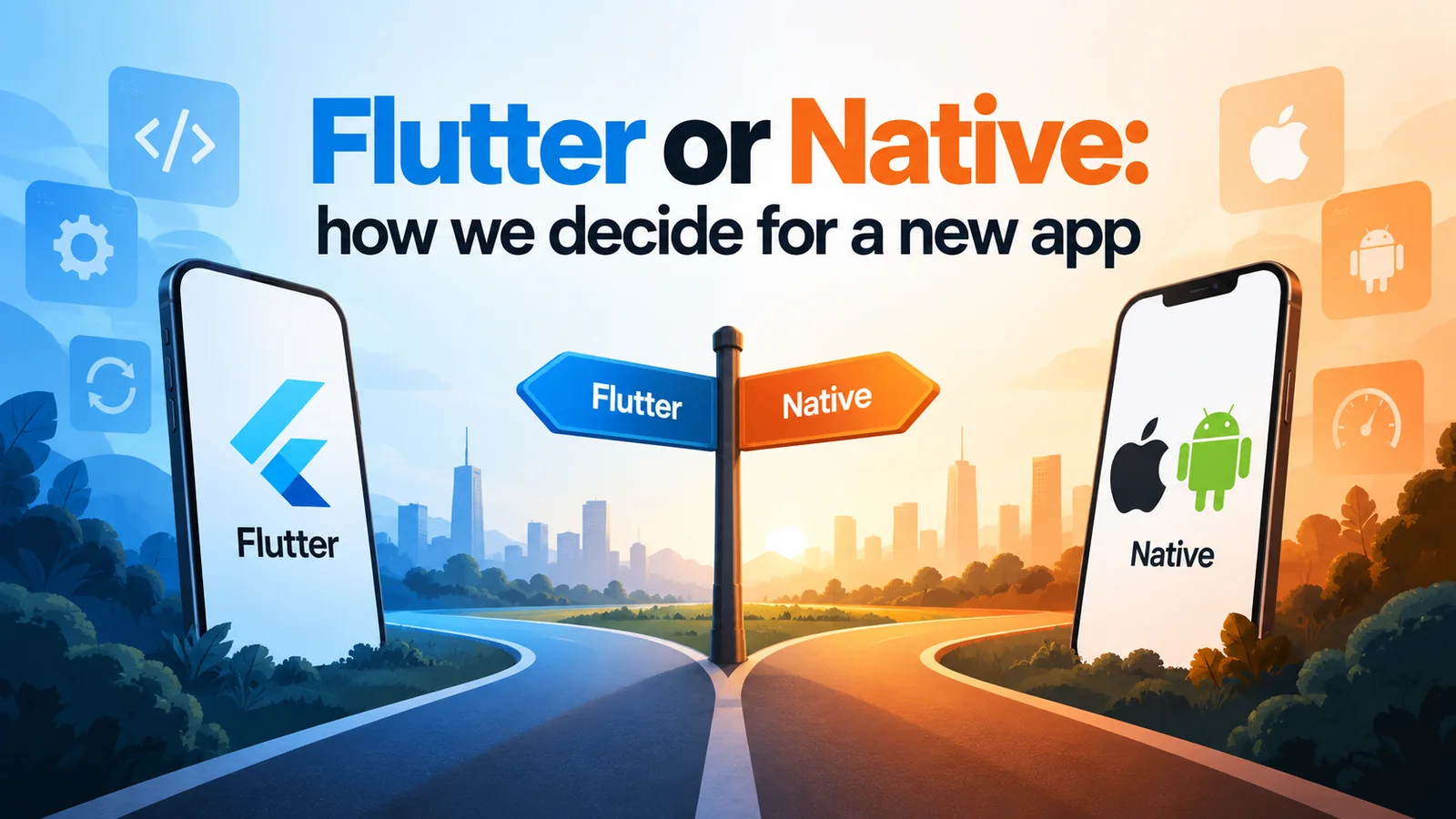
Flutter or native: how we decide for a new app
Most apps should be built once in Flutter. Some should not. Here is the short checklist we run through with every client before writing a line of code.
 Talha Javed2 min read
Most software agencies bill by the hour. It is easy for them: whatever happens, they get paid. It is hard for you: the thing you are buying has no price until it is finished. We quote fixed prices, and have done so on every project for years. This is what that means in practice.
A fixed price is only honest if the scope is written down. Before we quote, we produce a short document that lists:
The last point is the one most proposals skip, and the one that causes the most arguments later. If a feature is not in the document, it is not in the price, and we say so in plain words rather than leaving it to be discovered.
Design, development, testing, deployment to your cloud account and the app stores, documentation your team can follow, and 30 days of fixes after launch for anything that does not work as specified. Project management is not a separate line item; it is part of doing the work.
Third-party costs are passed through at cost: cloud hosting, app store developer accounts, SMS and email sending, AI model usage, paid APIs. We estimate them up front so there are no surprises, but they are your accounts and your bills, because you should own them.
Scope changes on every project; the question is how. Our rule is simple: a change is written down, priced, and approved before it is built. Small things that take under a couple of hours we absorb. Anything bigger gets a short change note with a price and a timeline impact, and you decide. Nobody is surprised by an invoice.
If we estimate badly, we eat the difference. That happens occasionally, and it is the right outcome: we are the ones who should know how long things take. The discipline it forces on us — scoping properly before quoting — is also what makes projects go well, so it is less of a sacrifice than it sounds.
If you do not yet know what you want to build, a fixed price would be a guess dressed up as a commitment. For that stage we suggest a short, paid discovery phase — usually one to two weeks — that ends with the scope document above and a firm quote for the build. For a product that is live and evolving every week, a dedicated team on a monthly retainer fits better. Both are on our pricing page.
If you have a brief, send it over. The quote comes back in writing, with the scope attached, and it is the price you pay.
More from the studio.
Most apps should be built once in Flutter. Some should not. Here is the short checklist we run through with every client before writing a line of code.
Talha Javed2 min readA generic chatbot and an AI trained on your business look the same in a demo. They behave very differently in month three. Here is what sits behind each, and when a simple chatbot is all you need.
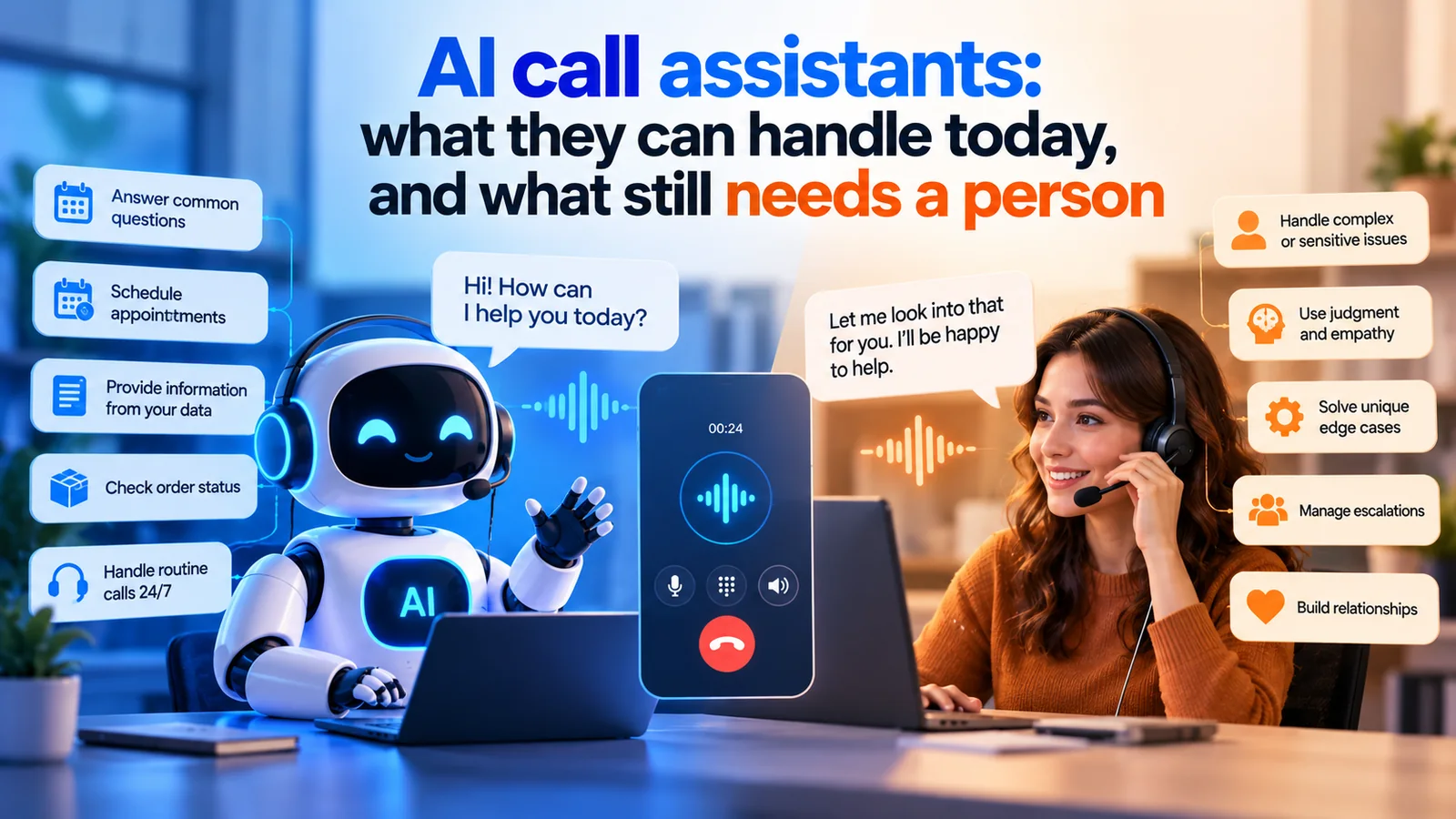
An AI that answers your phone is no longer science fiction, but it is not a receptionist either. Here is where voice assistants earn their keep, where they fail, and how we design the hand-off.
A free 30-minute call with a senior engineer. You leave with a plan and a price range, whether or not you hire us.