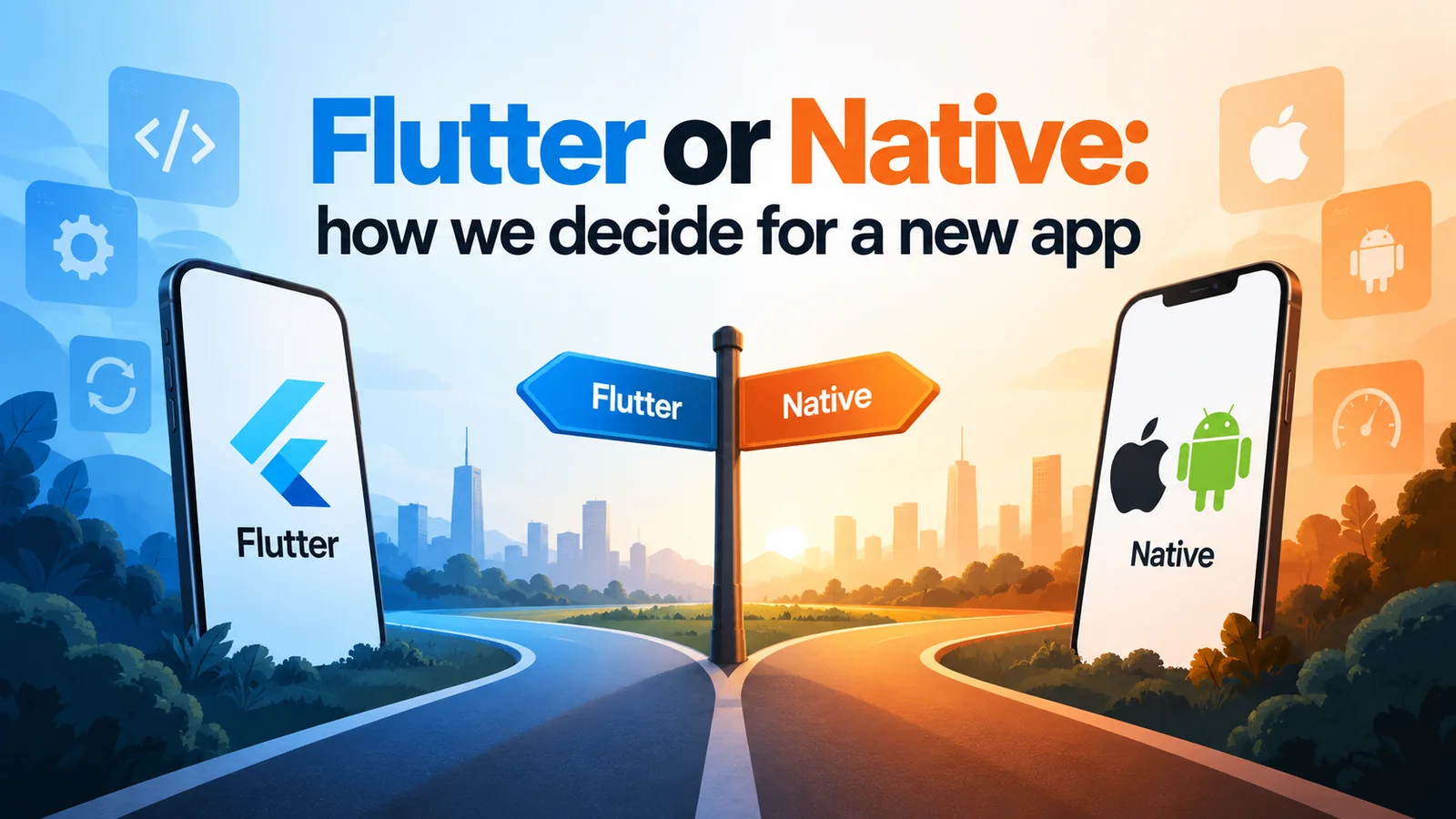
Flutter or native: how we decide for a new app
Most apps should be built once in Flutter. Some should not. Here is the short checklist we run through with every client before writing a line of code.
 Talha Javed2 min read
The exciting choices are the expensive ones. For most products, the right backend is a managed Postgres, a mainstream cloud and as few moving parts as possible. Here is our reasoning, and the exceptions.
Talha Javed3 min read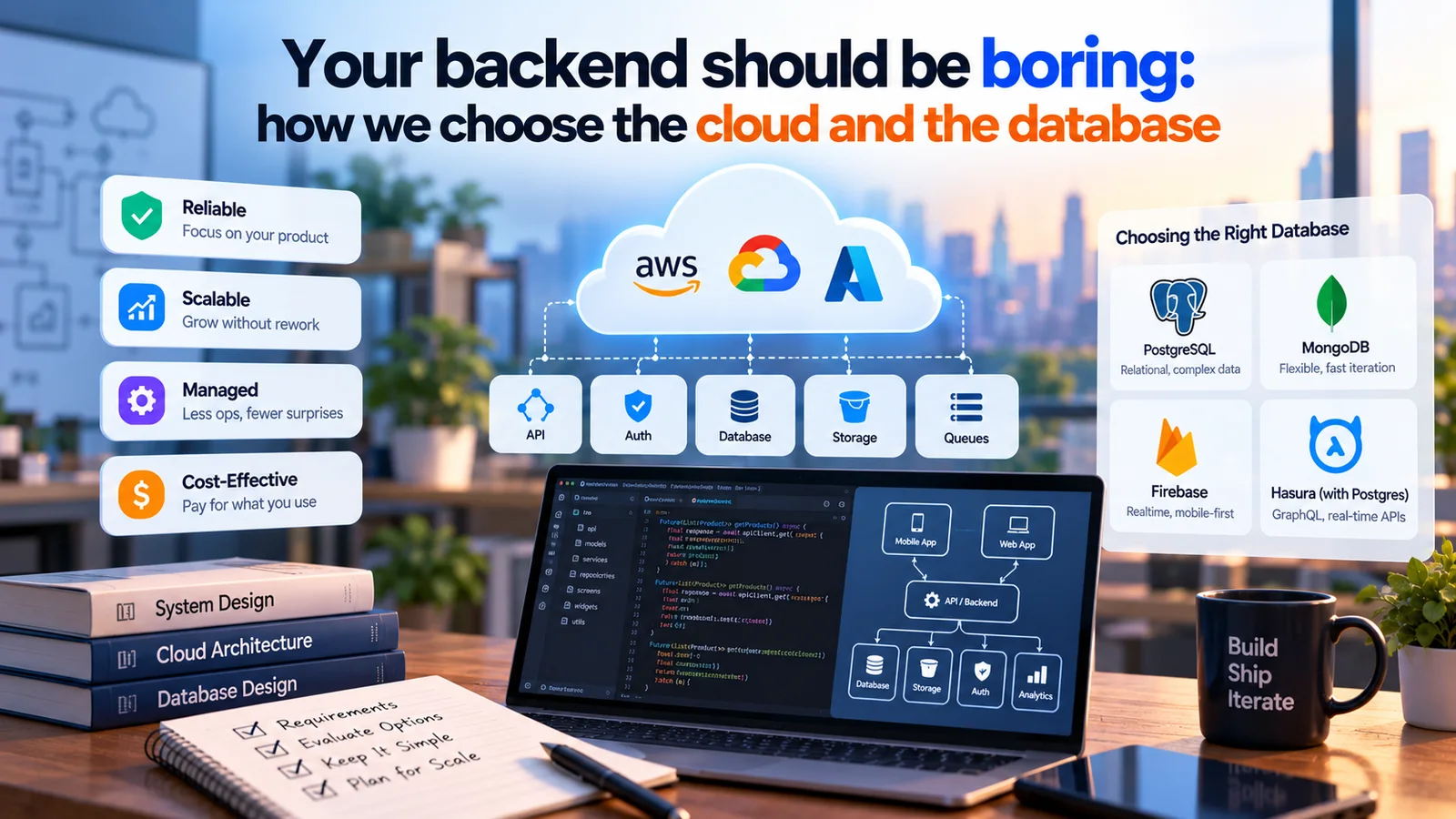
When clients ask what stack we will use for their backend, they sometimes expect a list of fashionable names. The answer is usually duller than that, on purpose. The backend is the part of a product nobody sees and everybody depends on; the best compliment it can get is that nobody has thought about it in months.
PostgreSQL is our default for almost everything. It is relational, which is what nearly all business data is; it handles JSON well when you need flexibility; it is mature, well understood, and available as a managed service on every cloud. A managed Postgres — one where backups, failover and upgrades are someone else’s job — removes an entire category of late-night problems.
We reach for something else only with a concrete reason: a time-series database for high-volume sensor data, a search engine alongside Postgres for product search at scale, a cache for hot data that is read far more than written. Each one is added when the need is demonstrated, not anticipated.
If your company already has an AWS, Google Cloud or Azure account — or your IT team has a strong preference — we use that. Consistency with your existing setup matters more than any technical difference between them. If you are starting fresh, we pick based on what the product needs (Google Cloud when Firebase or its AI services are part of the picture, say) and keep the footprint small enough that moving later is realistic.
What we avoid: spreading a product across several providers because each has one appealing feature. Every extra provider is another bill, another login, another set of credentials to secure.
Most products end up with a container for the API, a handful of functions around it, and a managed database. That shape is not exciting, which is the point.
Some products are their backend: real-time collaboration, high-frequency data ingestion, heavy AI inference, very large scale. Those deserve the careful, specific architecture conversations the rest do not. We are glad to have them — but we start from the boring default and justify each departure, rather than the other way round. In a decade of running production systems, that habit has saved more projects than any clever choice.
More from the studio.
Most apps should be built once in Flutter. Some should not. Here is the short checklist we run through with every client before writing a line of code.
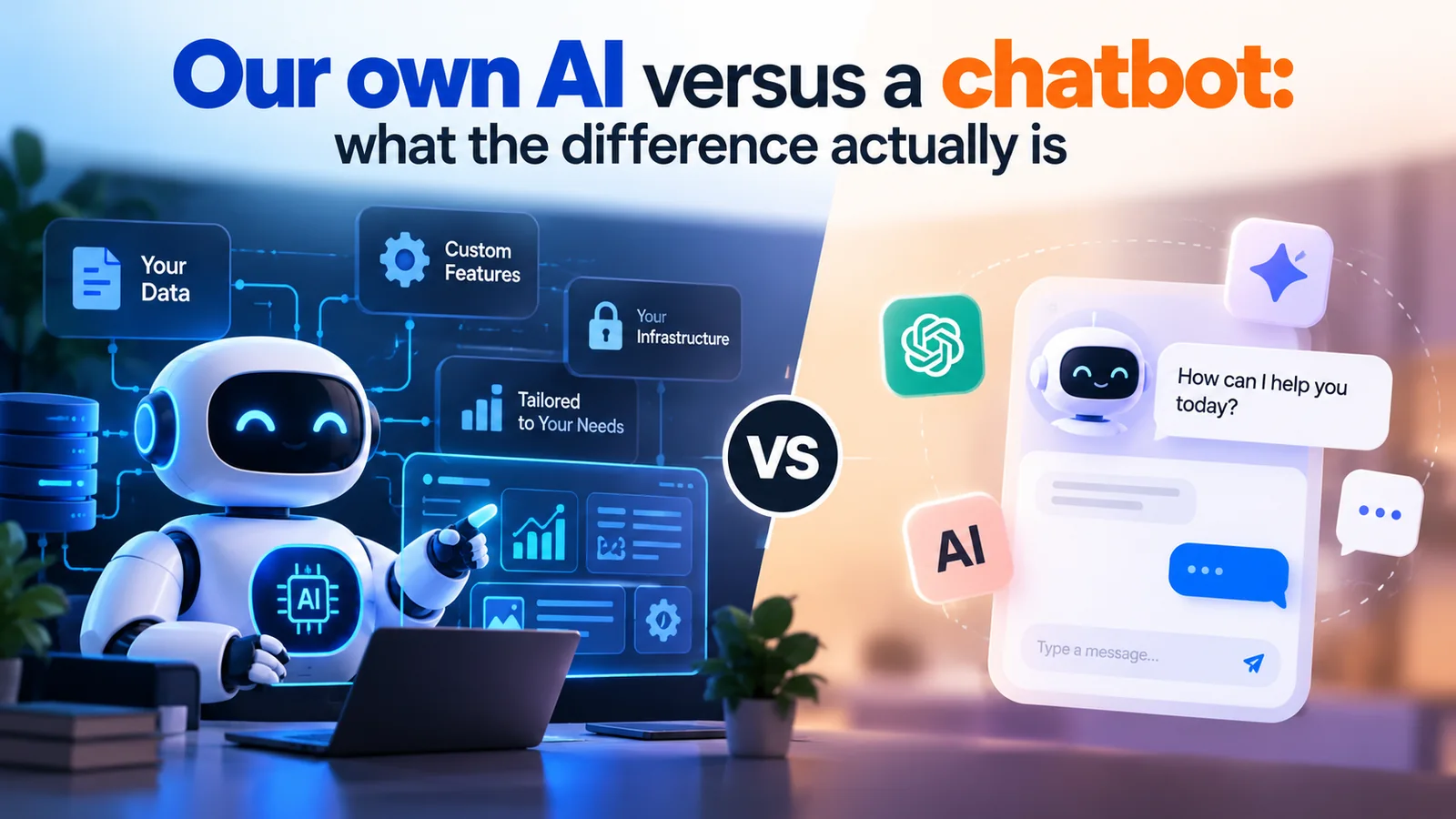
Talha Javed2 min readA generic chatbot and an AI trained on your business look the same in a demo. They behave very differently in month three. Here is what sits behind each, and when a simple chatbot is all you need.
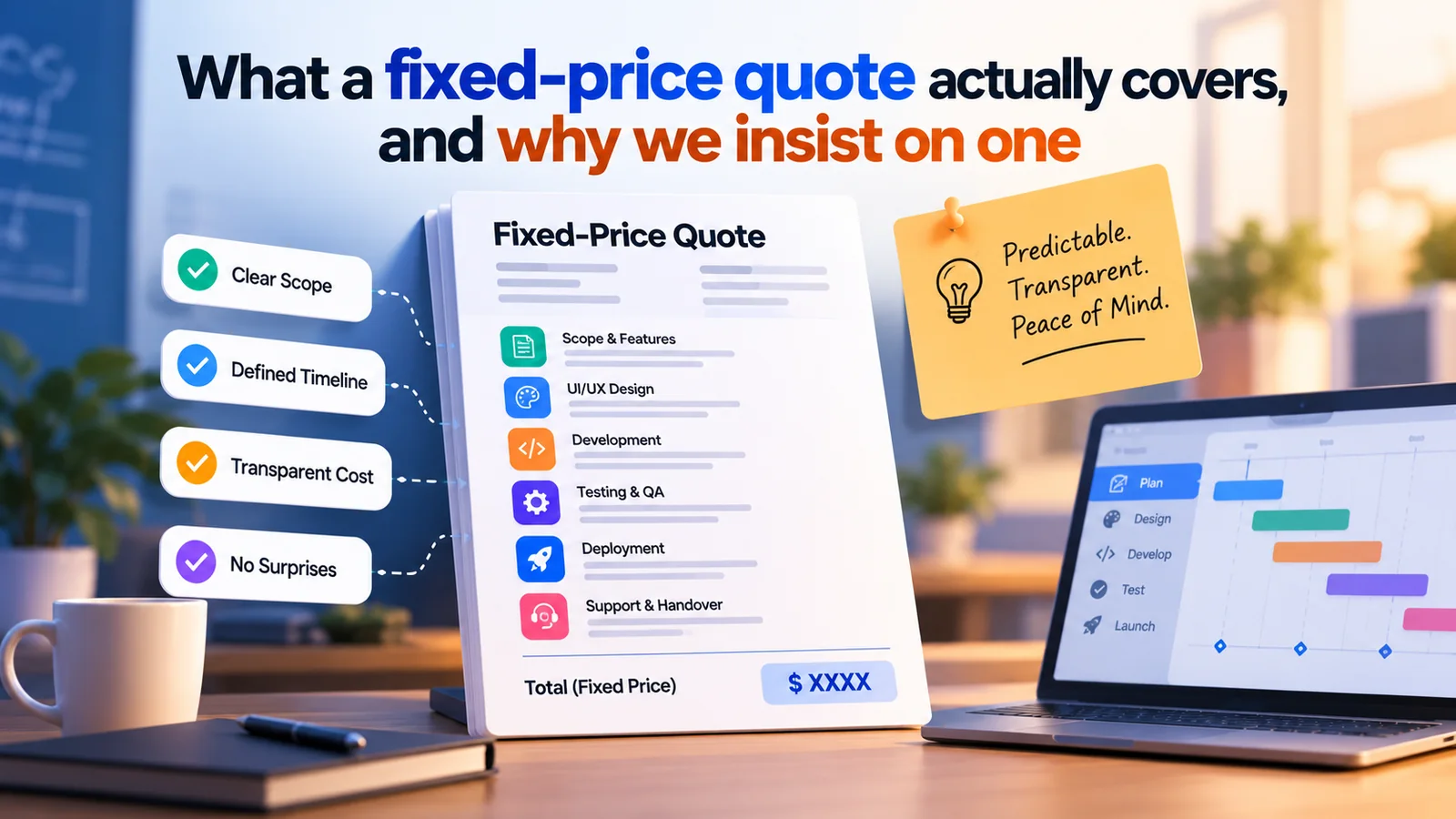
Hourly billing moves the risk onto you. A fixed price moves it onto us, which is where it belongs. Here is what goes into ours, what is excluded, and how changes are handled without drama.
A free 30-minute call with a senior engineer. You leave with a plan and a price range, whether or not you hire us.